I gave the same task to three setups: BMAD, GSD and one agent with no framework at all. Same model for everyone, GPT-6 Luna on high. A separate judge scored the results without knowing who made what. The agent with no framework won, and it wasn't close.
The task
An animated GIF of two bears wrestling by Greco-Roman rules. Holds above the waist only, no leg grabs, no trips, no strikes. Approach, clinch, a throw, a controlled landing, back to the start, in a seamless loop. Plus a script that rebuilds the GIF offline.
Why bears: it's small, it's visual, and you can see right away if it's wrong. A bear that floats, a throw that looks like a push, a hold that breaks the rules. No benchmark needed, you just look at it.
The results
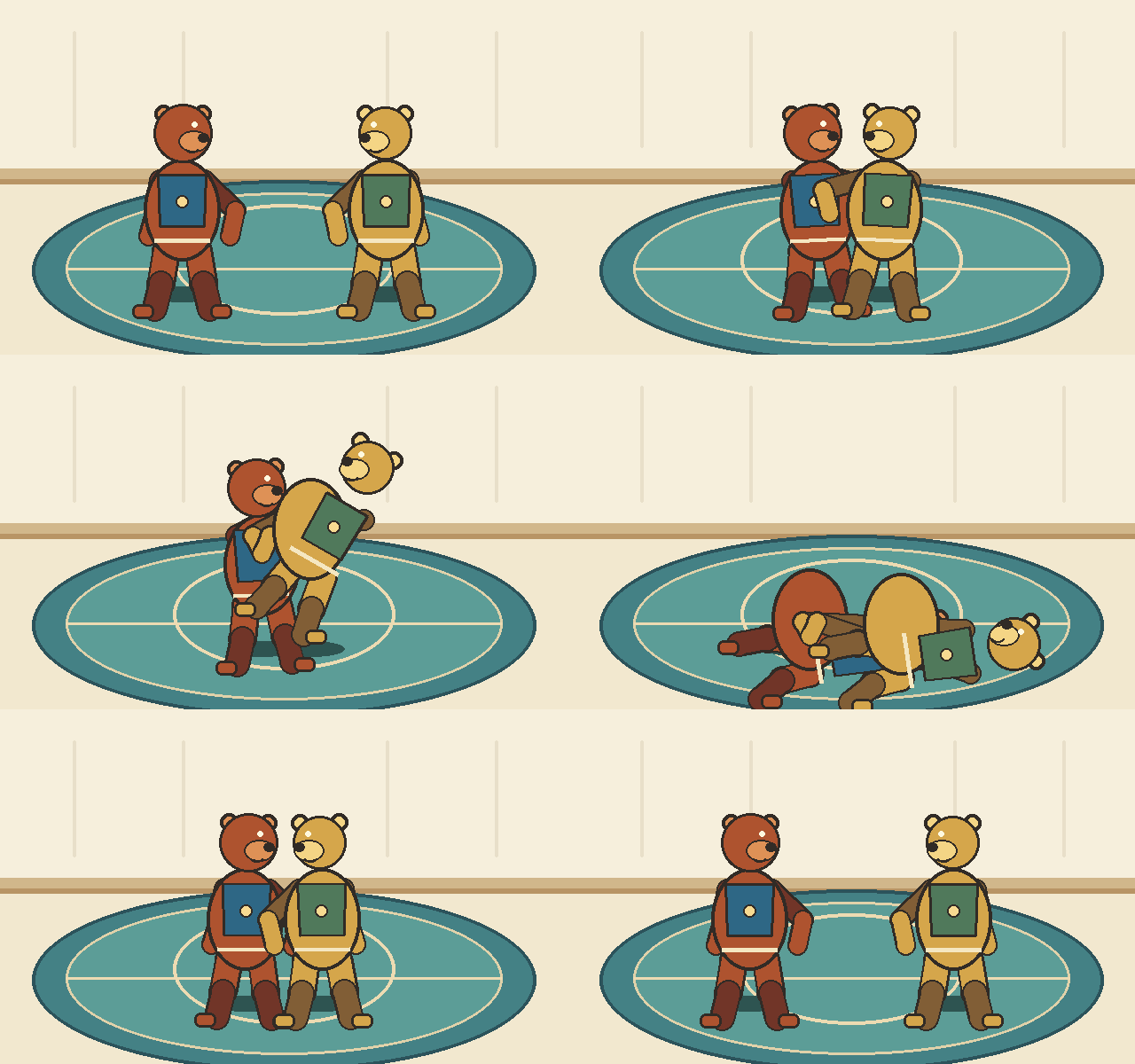
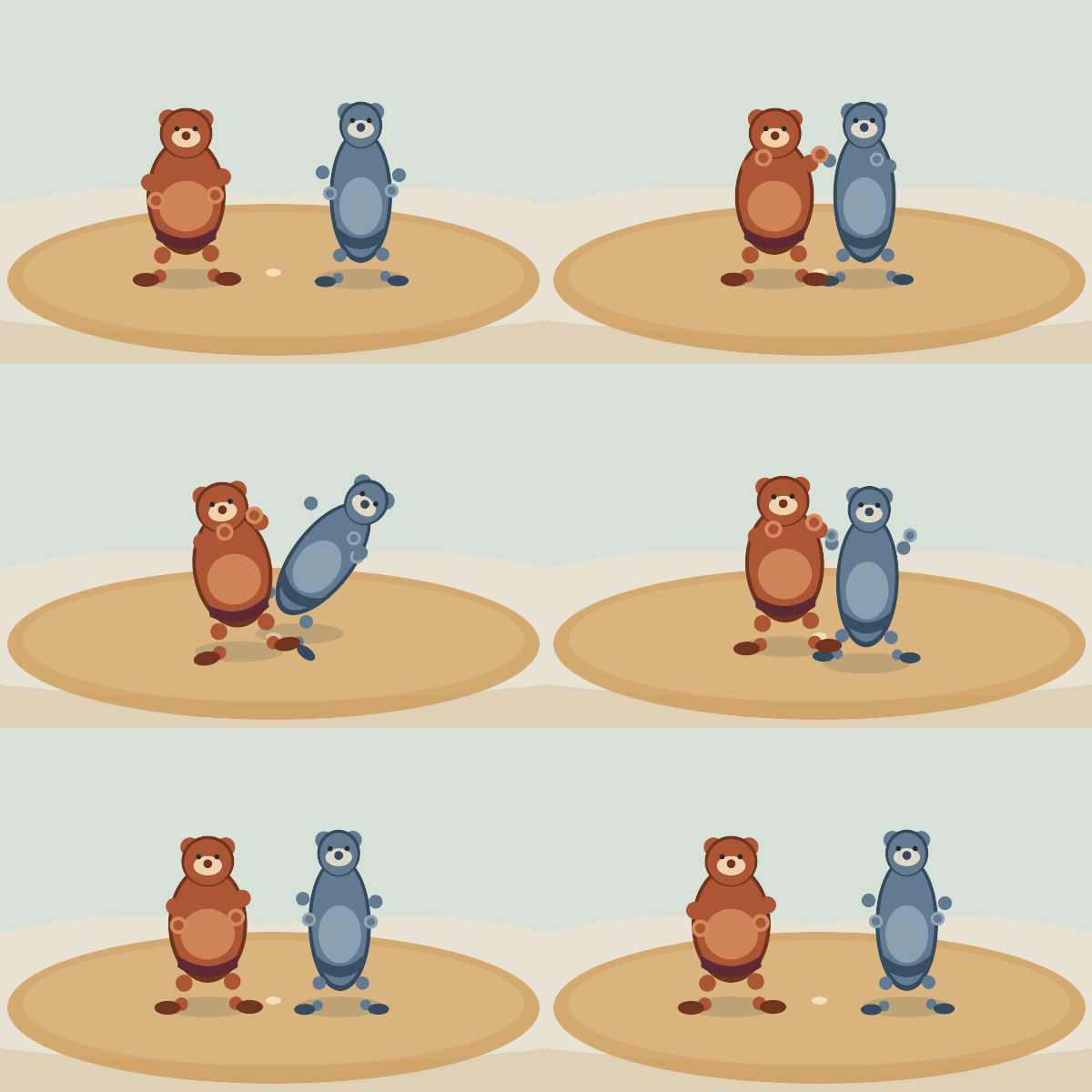
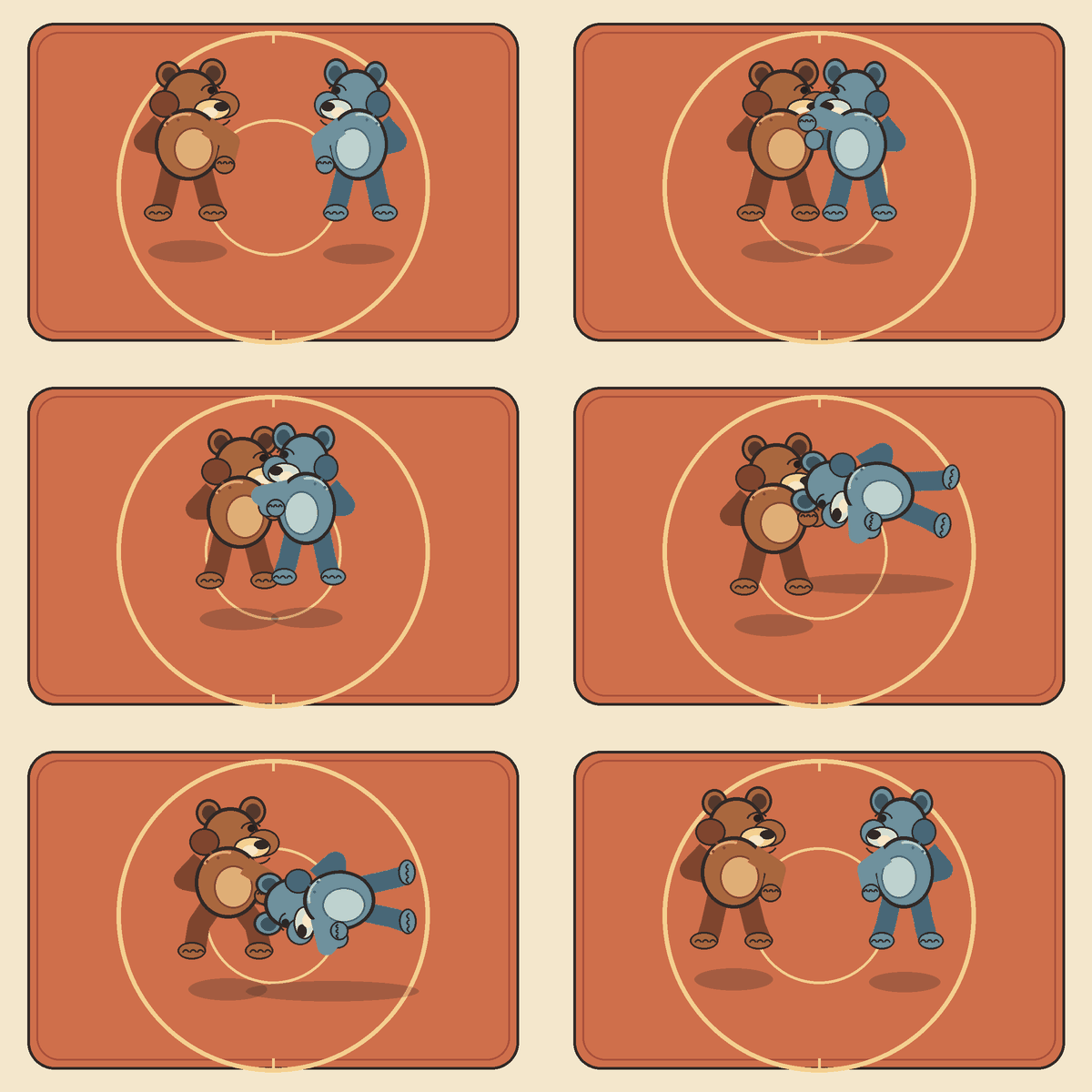
| One agent | GSD | BMAD | |
|---|---|---|---|
| Judge's score | 31/32 | 26/32 | 26/32 |
| Wall clock | 8 min 29 s | 60 min 57 s | 28 min 21 s |
| Agent sessions | 1 | 14 | 9 |
| Input tokens | 1.1 million | 62.6 million | 36.2 million |
| Output tokens | 24 thousand | 278 thousand | 196 thousand |
All three GIFs passed the hard checks: size, frame rate, seamless loop, offline rebuild. Nobody broke the wrestling rules. The difference is in how the fight looks and what it cost.
The judge was an AI too, the same GPT-6 Luna, looking at three anonymous GIFs and frame sheets. I watched them myself and I agree with the order. I wouldn't give any of them anything close to 31 out of 32, though.
The task, the prompts, all three generators, the judge's full verdict and the token numbers are on GitHub, so you can run it yourself.
One agent. One session, eight and a half minutes. The judge: both bears stay coherent the whole way, the holds are clear, the throw lands and they return to their spots. Lost one point for a slightly staged landing.
GSD. Fourteen sessions: discussion, research, planning, two planner revisions, a research revision, three extra plan checks, two waves of execution, verification. It hit the one-hour limit. The judge: the fall looks like a push into a sideways tip, not a throw, and the paws come apart at contact. GSD's own verifier also found that it never tested the forbidden poses.
BMAD. Nine sessions in 28 minutes, with planning, reviews and triage. The art is nice. But the blue bear hangs horizontally in the air for about forty frames and then both reset without landing. Also, one of its sessions looked at the process list and saw the command line of another arm, which it was told not to do.
To be fair, in all three runs the model didn't really pull it off as wrestling. I doubt there was much Greco-Roman wrestling in its training data.
Why
BMAD and GSD are processes for splitting work between people who can't see each other's heads. Analyst, architect, developer, reviewer, each with a document passed to the next. That makes sense when the work is too big for one person.
A current model holds this whole task in its head. Splitting it gave nothing back. Every handoff was another document to write and read, another chance to lose a detail, and another few million tokens. Most of those tokens were cached, so the bill isn't 55 times bigger, but the hour is real. And the extra agent eyes didn't catch a bear hanging in the air for forty frames.
Run on October 13, 2026 with Codex CLI 0.162.0-alpha.17.2, BMad Method 6.12.0 and GSD Core 1.15.0. Every session in every arm used GPT-6 Luna at high reasoning effort. Each arm got the same task file in its own Git repository; which framework got which repository was drawn at random. The judge saw only the three anonymous GIFs and frame sheets and scored eight criteria from 0 to 4: bears readable, bodies coherent, sequence readable, rules respected, grips, weight and landing, loop, polish. Token counts are as reported by the CLI; some interrupted GSD and BMAD sessions reported partial usage.